
A color scavenger hunt is about as simple as a game gets: someone names a color, everyone looks for it. It needs no equipment, it works in a park or a corridor, and it changes how you see a street you have walked a hundred times.
Here are rules that keep it fun, ideas for different groups, and a way to score it.
The basic game
- Pick a color, or a short list.
- Walk, and find things in that color.
- Collect them: point, photograph, or pick up something small that is allowed to be picked up.
The magic is in the word “find”. The color is rarely where you look first, and your eye starts spotting it in places you had ignored: a bicycle bell, the inside of a flower, a stranger’s scarf.
Rules that make it better
- Fix the time or the distance. Ten minutes, or to the end of the road. Open-ended hunts fade out.
- One find per object. A red door counts once, however many red doors there are.
- Decide how close counts. “Red” is generous. Is orange-red red? Argue about it in advance, or make it the fun part.
- Photograph, do not collect. Leave leaves, stones and flowers where they are, unless they are already on the ground and you agree to put them back.
- Look up and down. Half the best finds are on the pavement or above eye level.
Ideas for kids
- One color per child. Each looks for their color, then they trade finds.
- Rainbow hunt. Red, orange, yellow, green, blue, purple, in order. Hand out a card with six squares to tick.
- Color of the day. Pick one in the morning, and everyone watches for it until bedtime.
- Shade hunt. Find three greens and put them in order from lightest to darkest. It teaches that one color name covers many.
- Indoor version. Rainy day, one room, a time limit. Find ten blue things before the timer ends.
Ideas for adults
- Photo walk with a rule. Shoot only one color for a whole walk. It is a quiet way to practise composition.
- Match the swatch. Bring a paint chip and look for the closest real thing.
- Hunt with a friend. Same color, separate routes, compare at the end.
- Season hunt. The same color in autumn and spring, taken from the same street.
Keeping score without spoiling it
Scoring is optional, and for small children it is better left out. For older kids and adults a little friendly scoring adds spice:
- One point for each find, a bonus for the unusual one.
- A “best match” prize chosen by someone who did not take part.
- A tie-break: closest to the color on the card.
“Closest” is the part people argue about, because the eye is a poor judge. Our eyes adapt to context, so the same pink looks different against a red wall and a green hedge.
Where Color Hunt fits
Color Hunt is a daily version of this game for your phone. Each day it gives you one target color. You find something in it, take a photo with the camera, and it compares the color it detects with the target and shows a match as a percentage.
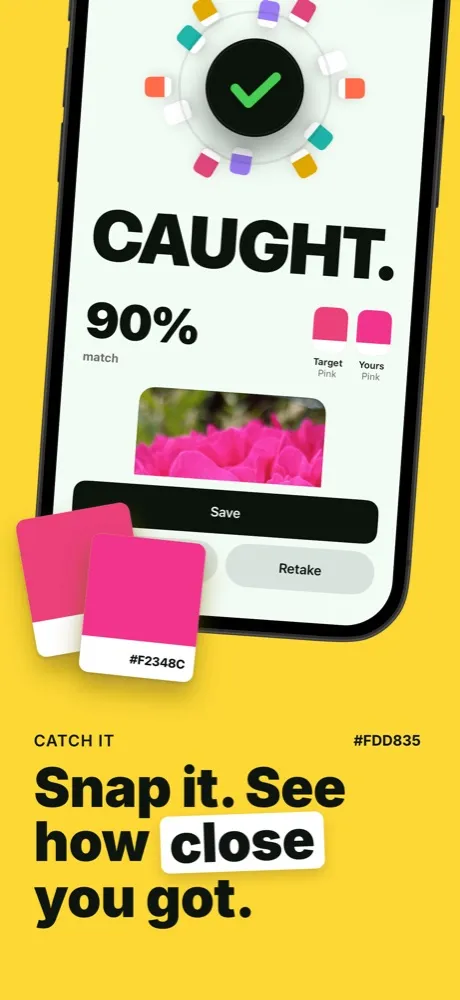
A few facts so you know what you get:
- The match is measured by the app from the photo, so it gives you a number to argue about instead of a feeling.
- You can drag to pick the exact spot in the photo that counts, because a red flower has a shadow side.
- There is a streak calendar, a collection sorted into 13 color families, and achievements.
- Free gives you the daily challenge, with up to three saved captures a day. Pro adds hunting any color you choose, not only today’s, plus more camera controls.
- No account, no ads, and the photos stay on your device.
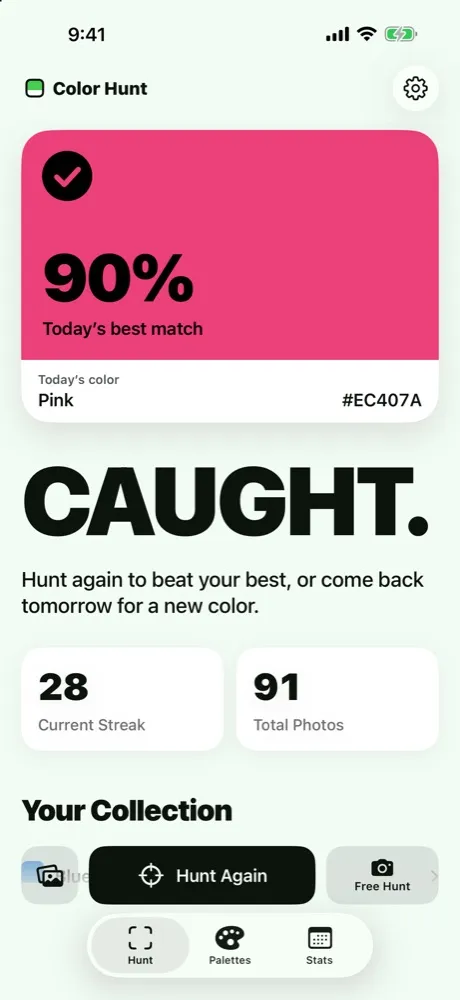
If you are playing with children, the paper version is probably the better one, because the point is the looking, not the phone. Color Hunt suits the solo or adult walk: a small reason to look up for a minute a day.
A first hunt to try today
Pick a color you are not wearing. Set ten minutes. Walk to the end of the street and back, and find five things in it. Then look at your five and ask which was the least expected. That is the one you would not have found without the game.


